Unsheathed
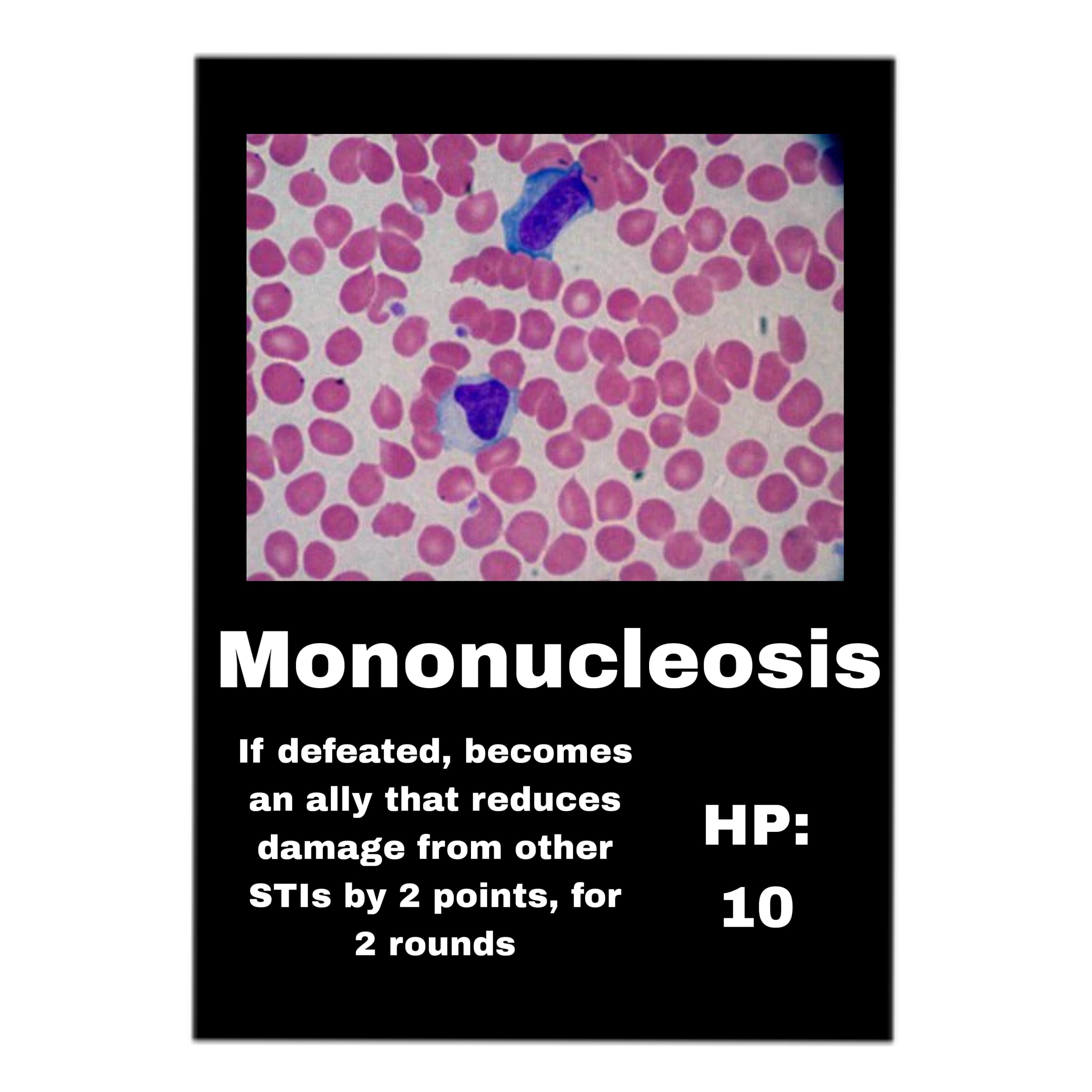
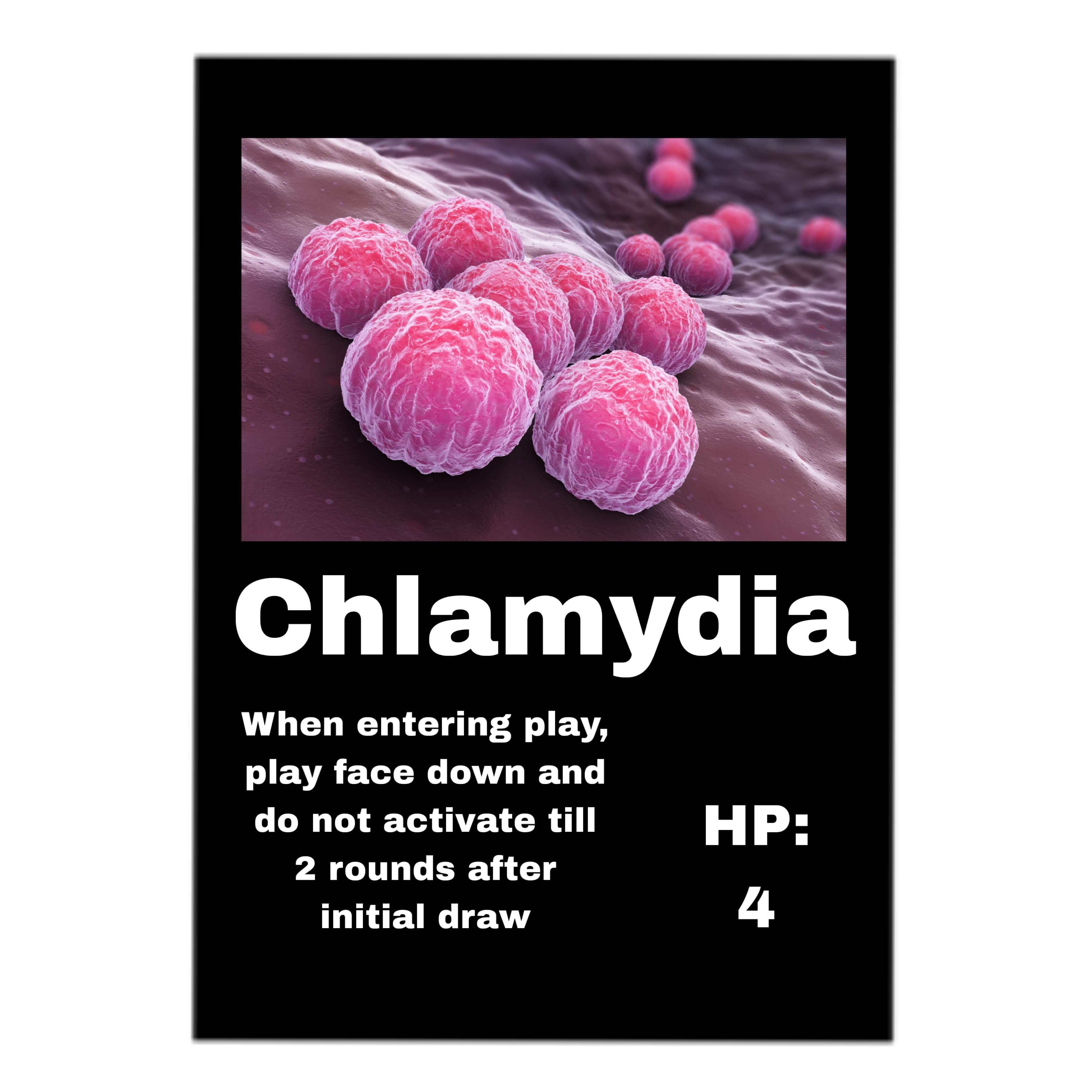
Game Concept: This is a round-based card game wherein players “fight” sexually transmitted diseases within a human body. In the game, the player is fighting STDs, using different methods of prevention and treatment. They are competing with other players to get the most points by using various attack cards, such as Antibiotics, Regular Checkups, and STD Warnings. The players must fight a variety of STDs and infections, varying in severity, with attack cards and event cards that help shed insight on their key info.
Prompt
The prompt was to design and build a transformational game in the format of either a physical board game (or card game) based on an assigned student group, club or association at The University of Delaware in groups of 2 or 3; I was one of a group of two. The student group my teammate and I were assigned was Planned Parenthood Generation Action, which is dedicated to raising awareness about reproductive rights & freedoms, the public policies regarding them, and advocating for those rights as well as educating UD students about sexual health and wellness.

Design Process
This board game was the result of a collaborative process, wherein the game was designed by a group of 2 as mentioned previously. Though the initial stages of the project such as idea selection were completed in unison, work on the game after this was mostly broken down based on individual group members' strengths and then compiled when we were each done with our respective tasks. Though these tasks were completed relatively independently, we come together to review each iteration before submission to make sure we were on the same page.
Challenges and Constraints
- The greatest challenge faced during this game design process was actually faced during the first iteration. My teammate and I settled on a card game, and due to time constraints we were unable to physically prototype our cards prior to scheduled playtesting. In therefore had to improvise a card drawing system within Google Slides, wherein a game manager tracked game states and dealt out cards from a virtual deck, the shuffling of which i simulated with a script i wrote.
-There were deadlines for all of the three iterations our game development process went under.
- Finding playtesters outside of class was not as challenging as other game design projects i have undertaken, however that too added to already tight time constraints as each iteration had to be playable prior to the times scheduled for playtests which were at times long before the actual iteration's deadline.
-The materials; there was a limited printing budget and a poster board provided only.

Idea Selection Process
The prompt of a transformational game coupled with a pre-assigned student group (Planned Parenthood Generation Action) allowed us to narrow down our game's transformational statement which also served as a thematic framework for our game. After deciding on a card game,
Background
My journey in game design, including education, cultural influences, and professional experience.
Resume
A summary of my skills, roles, and achievements in game design and production.
Contact
Get in touch via email or LinkedIn for collaboration, feedback, or networking opportunities.
Media & Links
Find my work on GitHub, itch.io, and other platforms for more projects and code samples.